

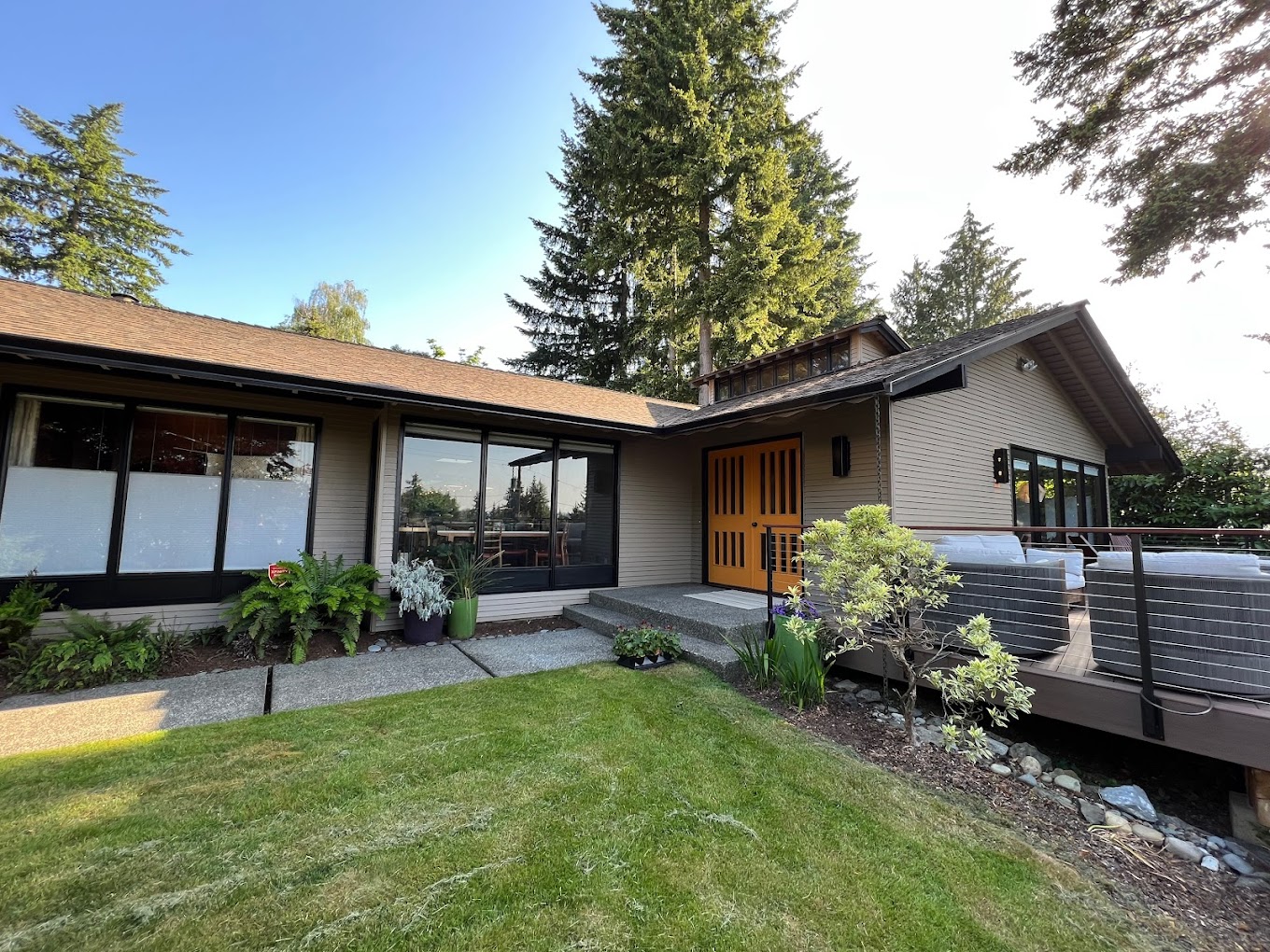
Exterior Trim and Accent Color Ideas for Seattle Homes
Why Trim and Accent Colors Matter
Exterior trim and accent colors can have a major impact on how a Seattle home looks from the street. While the primary body color establishes the overall appearance, trim, doors, shutters, and other architectural details can add definition and create visual separation between different elements of the home.
Trim commonly includes areas such as window casings, door frames, fascia, soffits, corner boards, and other architectural details. These elements can be painted in a complementary color to make them more noticeable or in a similar shade to create a more understated appearance.

Accent colors are typically used more selectively. A front door, for example, can provide a focal point without requiring a dramatic change to the entire exterior.
For Seattle homeowners, the goal should be to create a relationship between the body, trim, and accent colors rather than choosing each color independently.
Choosing a Trim Color That Complements the Main Exterior
The trim color should work with the primary siding color while supporting the home’s architectural style. A classic approach is to use a lighter trim color against a darker body color, but Seattle homeowners are not limited to that combination.
For a softer appearance, homeowners can select trim that is only moderately lighter or darker than the siding. A monochromatic palette can create a subtle, contemporary appearance, while stronger contrast can emphasize traditional architectural details.
Consider the following when choosing trim:
- The existing siding color
- Roofing color and undertones
- Window frames and exterior doors
- Brick, stone, or masonry
- Architectural style
- Landscaping and surrounding homes
- How much contrast you want between surfaces
White and off-white trim can create a traditional appearance, while gray, charcoal, beige, taupe, or other coordinated neutrals can produce a more contemporary palette.
The key is to evaluate undertones. Two neutral colors can appear noticeably different if one has warm beige or brown undertones and the other leans toward blue or gray.
Testing samples directly against the siding is one of the best ways to evaluate how a trim color will actually look on the property.
Using the Front Door as an Accent
The front door is one of the easiest places to introduce an accent color because it represents a relatively small portion of the exterior.
A bold door color can create a focal point, while a more subdued shade can maintain a traditional or understated appearance. The best choice depends on the home’s primary and trim colors as well as the surrounding architecture.
When selecting a door accent, consider colors that coordinate with existing exterior elements rather than treating the door as a completely separate design feature.
For example, an accent color might subtly relate to landscaping, architectural materials, or other small details around the property. Alternatively, homeowners may deliberately choose a contrasting color to make the entry stand out.
Not every Seattle home needs a bold front door. A deeper version of the existing exterior color or a carefully selected neutral can provide distinction without creating a dramatic contrast.
Before committing to an accent color, test a sample in the actual entry area. Natural lighting and nearby siding colors can significantly affect how the shade appears.
Coordinating Shutters, Garage Doors, and Other Details
Trim and accent colors do not have to be limited to window trim and the front door. Garage doors, shutters, porch details, columns, railings, and other exterior elements can also become part of the overall color scheme.
However, using too many competing colors can make an exterior look disconnected. A more cohesive approach is to establish a primary body color, a trim color, and one or two carefully selected accent colors.
Garage doors are particularly important because they can represent a large visual area. Some homeowners choose to match the garage door closely with the siding so it blends into the exterior, while others use a complementary shade to make it more visually distinct.
Shutters and smaller architectural features can either match the trim or repeat the accent color used on the front door.

Seattle’s mature landscaping can also influence the final appearance. Trees and greenery may provide strong natural contrast against certain siding and trim colors, so homeowners should evaluate samples in the context of the entire property.
Creating a Cohesive Exterior Color Scheme for Your Seattle Home
A successful exterior color scheme does not necessarily require dramatic colors. In many cases, the strongest results come from carefully coordinating a few colors across the home’s major architectural elements.
Start with the body color, which covers the largest area. Next, choose a trim color that complements the siding and defines important architectural details. Finally, select an accent color for one or more focal points, such as the front door.
It is also important to remember that color selection is only one part of an exterior painting project. The siding and trim need to be properly prepared, damaged areas repaired, and the appropriate exterior coating selected for the surface.
Seattle homeowners should also consider how the colors will look under different lighting conditions. Test samples on the actual home and observe them at different times of day before making the final decision.
If you’re planning an exterior painting project, a professional Seattle painting contractor can help you evaluate body, trim, and accent colors while also identifying preparation or repair work that should be completed before painting.
With the right combination of body, trim, and accent colors, homeowners can highlight architectural details, create a more unified appearance, and give their Seattle home a carefully considered exterior color scheme without relying on excessive contrast or too many competing shades. Get a free estimate today!

