

Choosing Exterior Paint Colors for Seattle Homes
Start With Your Seattle Home’s Architecture
Choosing an exterior paint color is about more than selecting a shade you like. The right color should work with the architecture of the house, permanent materials, surrounding landscape, and overall character of the property.
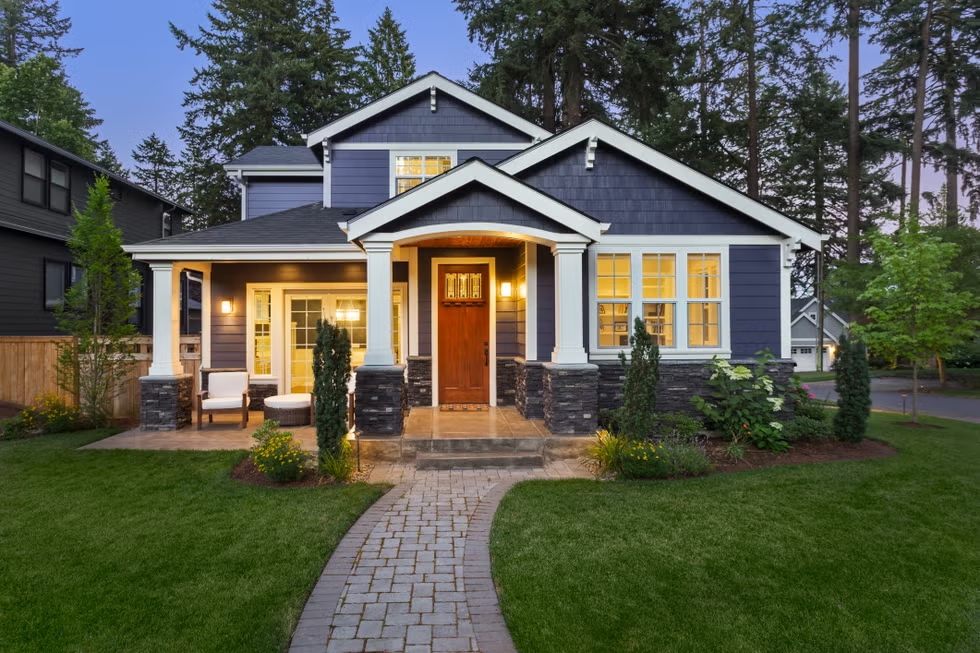
Seattle has a wide variety of residential architecture, from Craftsman and Tudor-style homes to contemporary houses, mid-century properties, and traditional Pacific Northwest designs. Exterior colors can emphasize architectural details such as siding, trim, columns, doors, gables, and window surrounds.
Start by identifying the elements that will not be painted. Roofing, brick, stone, masonry, and other permanent materials should influence the color palette. For example, a roof with strong brown or warm undertones may coordinate better with a warm exterior palette, while gray or charcoal roofing can work with cooler or more neutral colors.

Benjamin Moore’s exterior color inspiration resources emphasize considering the architectural style and existing features of a home when developing an exterior color scheme.
A professional painting contractor can also help homeowners determine which architectural features should remain subtle and which ones could benefit from a contrasting accent color.
Consider Seattle’s Surroundings When Selecting Colors
Your home’s surroundings can have a significant influence on how an exterior color looks. Seattle properties may be surrounded by mature trees, evergreen landscaping, gardens, neighboring homes, and natural Pacific Northwest scenery.
Green foliage can make certain exterior colors appear different than they do on a paint chip or interior wall. Neutral colors such as gray, beige, taupe, white, and muted green can complement natural surroundings, while darker or more saturated colors can create stronger architectural contrast.
This does not mean Seattle homeowners need to choose green or neutral paint. The goal is to create a palette that works with the property’s existing environment.
Consider the following when evaluating colors:
- Permanent landscaping and mature trees
- Roofing and stone or brick elements
- Neighboring homes
- Driveways, walkways, and hardscaping
- The home’s architectural style
- Existing window and door colors
- The amount of natural light surrounding the property
The same color can look noticeably different depending on the amount and direction of light hitting the exterior. A color viewed in full sun may appear different from the same color on a shaded north-facing wall.
For this reason, homeowners should test exterior colors on the actual house whenever possible rather than making a final decision from a small color card alone.
How Many Exterior Colors Should a Seattle Home Have?
There is no mandatory number of colors for an exterior, but many successful color schemes use a coordinated combination of a main body color, trim color, and accent color.
The body color covers the largest surface area and establishes the overall appearance of the home. Trim can be used to define architectural details around windows, doors, rooflines, and other features. An accent color can be reserved for elements such as the front door, shutters, or selected architectural details.
A three-color approach is not a requirement. Some homes look better with a simple two-color palette, while others have enough architectural detail to support additional variations.
The important factor is coordination. Exterior colors should have a visual relationship rather than appearing as unrelated selections.
For homes with distinctive architectural details, using a slightly contrasting trim color can help those features stand out without overwhelming the main exterior.
Test Exterior Paint Colors Before Committing
One of the most important steps when choosing exterior paint colors is testing your selections on the actual property. A color that looks appealing on a digital screen or small sample can appear substantially different once it covers a large exterior surface.
Natural light, surrounding trees, roof color, siding texture, and the orientation of the home can all influence how a color is perceived.
Try samples in several locations around the house. Look at them during different times of day and compare them under both direct sunlight and shade. This can help reveal whether the color has undertones that you did not notice initially.
Texture also matters. A smooth surface can reflect light differently than textured wood siding, while cedar, fiber cement, stucco, and masonry can each produce a different visual result.

If you’re considering a darker exterior, it is particularly important to evaluate the color on a larger sample area before committing to the entire home. A color that appears balanced on a small chip may feel significantly stronger when applied across hundreds or thousands of square feet.
Seattle homeowners should also consider how the selected colors will coordinate with existing doors, windows, roofing, and landscaping. The goal is to evaluate the entire exterior as a composition, rather than selecting the body color in isolation.
Choosing Exterior Colors That Work for Your Seattle Home
The best exterior paint color is ultimately one that fits the home’s architecture, surroundings, permanent materials, and the homeowner’s preferences. There is no single “Seattle color” that works for every property.
Start by evaluating the existing features that will remain in place. Then narrow your choices to a manageable palette and test those colors on the actual exterior. Pay attention to undertones, natural lighting, siding texture, trim, roofing, and landscaping before making the final decision.
It is also important to distinguish between choosing a color and choosing the complete coating system. Once the color is selected, the exterior surface still needs to be properly prepared and the appropriate exterior paint selected for the substrate and project conditions.
For Seattle homes, that preparation can be particularly important because exterior surfaces are exposed to moisture and changing environmental conditions throughout the year. Peeling paint, damaged wood, deteriorated caulking, and other surface problems should be addressed before applying a new finish.
If you’re unsure which colors will work best with your home’s architecture and surroundings, a professional Seattle painting contractor can help you evaluate samples, coordinate body and trim colors, and determine what preparation is needed before painting begins.
A thoughtful color selection can give your Seattle home a cohesive appearance while highlighting its architectural character. Taking the time to evaluate the surroundings, test samples, and coordinate the complete exterior palette can help you feel confident before the first gallon of paint is opened. Get a free estimate today!